

Rolling out one sign is a design project. Rolling out the same brand sign across several locations is a systems project. Every unit has to look consistent, fit a different wall and arrive with enough information for a local team to install it correctly.
This guide is for Canadian franchises, retail groups, clinics, studios, hospitality brands and agencies coordinating illuminated logo or message signs across multiple sites.
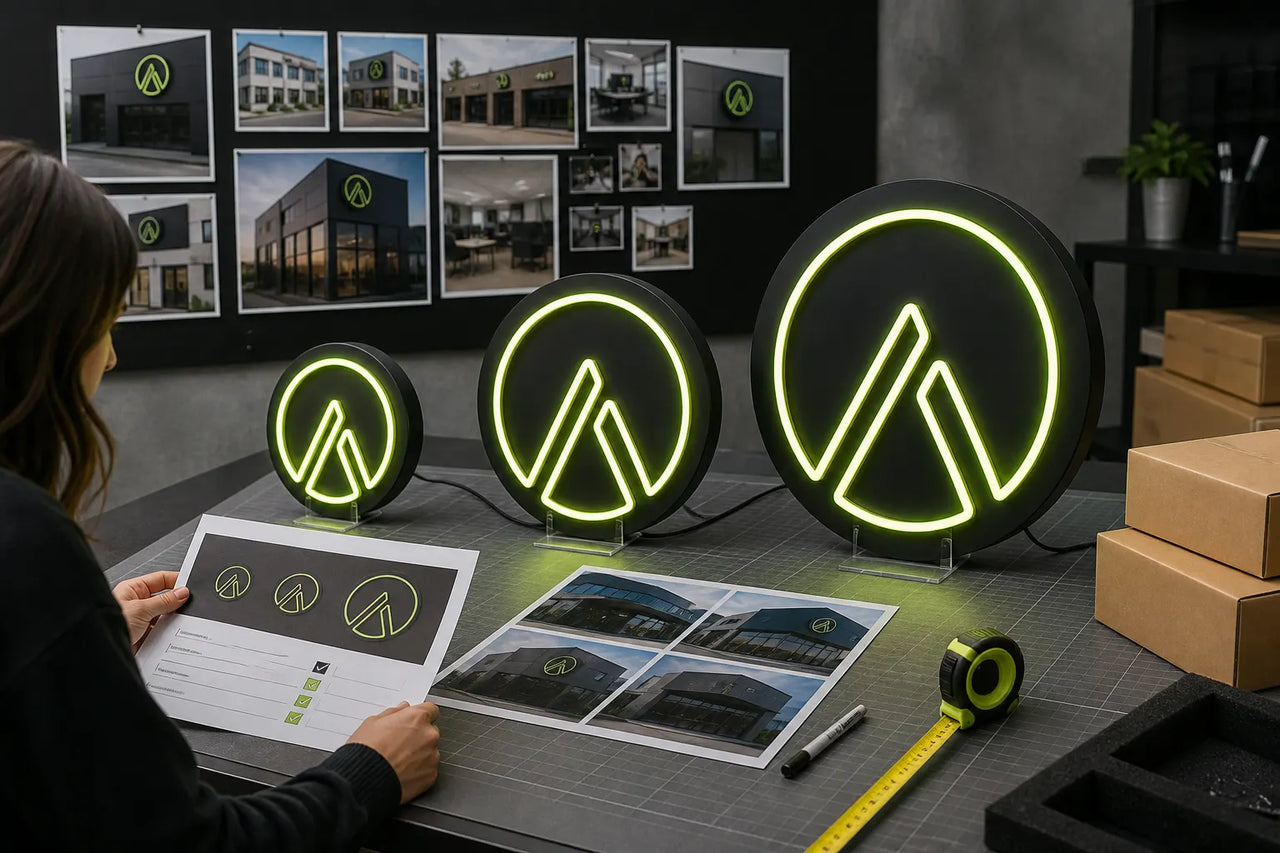
Define what the rollout includes
Decide whether the program covers interior decorative brand signs, event signs, exterior identification or several categories. These are not interchangeable. Decorative LED neon can support reception areas, content walls and in-store experiences, while exterior primary signage, accessibility signs and required wayfinding may involve local permits, codes and specialized installers.
Record the category and approval route for every sign before requesting a national quantity. A repeatable interior logo may share one design standard, but each exterior or regulated application still needs site-specific review. This boundary keeps the rollout guide useful without treating one product as a substitute for every sign a location needs.
Begin with a sign standard, not a purchase list
Before requesting quantities, define what must remain consistent and what can change. The logo proportions, colours, lighting style and general construction usually stay fixed. Width, cable exit, mounting hardware and power-cord length may vary by site.
Create a short standard that records:
- approved logo artwork and colour references
- sign construction and illumination type
- standard size options
- acceptable wall and mounting conditions
- power requirements
- packaging and labelling rules
- the person or team authorized to approve exceptions
This document prevents local teams from making independent changes that gradually weaken brand consistency.
Include a controlled version number and approval date. When a logo, colour reference or hardware rule changes, retire the older standard and identify which locations are affected. A file called “final” is not enough when several agencies, installers and regional teams are working at once.
Our bulk custom neon sign service is designed for repeated designs, phased releases and multi-location programs. For a broader comparison of illuminated business sign types, begin at the commercial signage hub.
Audit every location before production
Similar locations are rarely identical. One reception wall may be concrete, another drywall and another glass. A storefront may have more daylight than the prototype site. Outlet locations, landlord rules and local installation access can also differ.
Ask each location to provide:
- a straight-on wall photo
- a wide photo showing nearby doors, furniture and outlets
- wall width and height
- wall material, if known
- the nearest power source
- any building or landlord restrictions
- the local contact and preferred delivery window
Use a simple naming system, such as brand-city-site number, for photos and measurements. Avoid accepting measurements through scattered email threads without recording which location they belong to.
Mark the proposed outside dimensions on each wall photo, including the backing rather than only the glowing artwork. The neon sign size guide explains how usable wall area, viewing distance and surrounding furniture affect the final scale.
Assign a confidence status to every site: verified by installer, verified by local manager, or awaiting confirmation. Do not release a location with missing wall, outlet or access information simply because its opening date is close.
Produce and approve one prototype
A prototype establishes the real standard. It lets the brand team assess colour, brightness, scale, cable placement and packaging before the rest of the order enters production.
Review the prototype in conditions similar to the final site. If most signs will sit in bright storefronts, do not approve only from a dark-room photo. If the signs will appear behind reception desks, evaluate the viewing distance and camera exposure for staff photos or video calls.
For a logo with fine details or gradients, read how to prepare a logo for a custom LED neon sign. The design may need simplified illuminated lines, printed details or a different sign construction.
Create acceptance criteria before approving the prototype. Check logo geometry, colour reference, brightness range, outside dimensions, cable exit, mounting points, labelled components, packaging and the installation sheet. Save straight-on and powered photos as the comparison set for later batches.
Choose a rollout model
There are three common approaches:
One national shipment
All signs ship together to a warehouse or head office. This centralizes quality control, but the receiving team must redistribute and protect each package.
Direct-to-location shipping
Each sign ships to its final site. This reduces handling, but it requires accurate addresses, receiving hours and local contacts.
Phased rollout
Signs are produced and released in groups. This works well when locations open on different dates or when the first group will inform later installation instructions.
Select the model before production so packaging labels, tracking and internal communications are built around it.
For a larger program, release a pilot group before the national batch. Choose sites with different wall types or delivery conditions rather than only the easiest locations. Record install time, packaging performance and local questions, then update the standard once before wider release.
Make every package location-specific
The outside label should identify the location without exposing unnecessary customer details. Inside, include a packing list and a concise installation sheet. Hardware should be grouped and labelled rather than loose in the box.
The installation sheet should show the approved orientation, mounting points, power connection and final placement. If a qualified installer is required, say so clearly. Do not imply that one mounting method is safe for every wall.
For permanent office installations, the office and reception signage page shows how illuminated logo signs can be planned around desks, waiting areas and camera views.
Control changes during the rollout
Late local requests can create unnecessary custom variations. Route every change through the central owner and record whether it affects only one location or changes the master standard.
Use a tracker with these fields:
- location name and address
- approved sign size
- artwork version
- mockup approval date
- production status
- shipment tracking
- received confirmation
- installation status
- issue notes and resolution
Photographic confirmation is useful at receipt and after installation. It catches shipping damage early and shows whether the sign was mounted in the approved position.
Track exceptions separately from ordinary progress. An exception record should state the location, requested change, reason, approving person, cost or schedule effect, and whether it changes the master standard. This prevents a one-off site condition from quietly becoming the new default.
Plan replacements and future locations
Keep the approved vector artwork, final dimensions, colour reference and construction details in one shared record. If the brand opens another location next year, the team should not have to reconstruct the specification from invoices and old emails.
Ask how replacement components are identified and whether the sign design can be reproduced consistently. Store the installation guide and one clear photo of the successful finished site with the specification.
Multi-location signage checklist
Before releasing the full order, confirm:
- one owner controls approvals and exceptions
- every site has submitted photos and measurements
- the prototype has been assessed in realistic lighting
- the sign standard records fixed and variable details
- shipping labels and contacts are location-specific
- every package contains the right instructions and hardware
- installation responsibility is clear
- the tracker covers delivery, installation and issue resolution
EasyNeonSigns can help Canadian business groups plan repeated illuminated signs without losing local fit. Request a multi-location signage quote with your artwork, location count, target dates and shipping plan.
